close window
Art Agnos Mayoral Pictoral History
 “After stinging criticism from Mayor Agnos, the Red Cross relented and announced that ‘every penny’ would stay in the Bay area” -- New York Times - March 6, 1990.
The American Red Cross collected more than $52 million for Bay Area earthquake relief. With news of the devastating October 17, 1989 earthquake came an outpouring of help from across the country.
As San Franciscans were pictured in nightly national news reports, neighbor helping neighbor, the nation opened its checkbooks. $52 million was sent to the American Red Cross.
But a lack of money for countless human needs made it apparent that something was wrong. The Agnos Administration discovered that the Red Cross planned to spend only $12 million aiding the Bay Area.
But to its credit, the Red Cross listened to the Mayor’s objections and confronted the issue squarely. Reevaluating its policies, it has established a new partnership with the city to solve the tough urban problems left by the disaster.
The earthquake had required an extraordinary response of the part of the Mayor, city employees, and social programs.
The Chronicle commented: “This was, of course, a particular time of trial for public figures…Mayor Agnos plunged unsparingly into the difficult and complex business of coordinating rescue and damage control efforts, and of seeing to it that those who had been disposed could find someplace to go.”
 “Careful management helped the city to absorb both the immediate impact of the October 17, 1989 earthquake as well as drought-related revenue losses without reducing services.”
Moody’s Municipal Credit Report, January 7, 1991
“Careful management helped the city to absorb both the immediate impact of the October 17, 1989 earthquake as well as drought-related revenue losses without reducing services.”
Moody’s Municipal Credit Report, January 7, 1991
San Francisco has maintained excellent city financial ratings on Wall Street despite the earthquake, drought and recession.
In affirming San Francisco’s “AA” bond rating last year, Standard and Poor’s, the Wall Street financial credit rating company wrote:
“Mayor Art Agnos’ fiscal budget was a major accomplishment, as the plan provided for two-year pay increases and settlement of all labor contracts, expansion of some services and no major tax increases.”
On January 7, 1991, Wall Street’s Moody’s Municipal Credit Report confirmed continued strong management of San Francisco: “The city’s financial position has improved in recent years due to strengthened budgetary control, efforts to broaden reserves and favorable economic performance.”
“Conservative budgeting and careful management helped the city to absorb both the immediate impact of the October 17, 1989, earthquake as well as drought-related revenue losses, without reducing services.”
Mayor Agnos’ office won the 1990 “Public Finance Administration Excellence Award” from the California Certified Public Accountants Association.
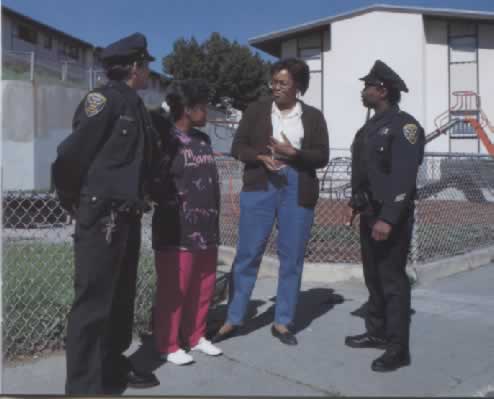 “The City of San Francisco should maintain and strengthen this effort, and public officials elsewhere should look to this program for lessons in their own efforts.”
The Office of Substance Abuse, Washington, D.C.
“The City of San Francisco should maintain and strengthen this effort, and public officials elsewhere should look to this program for lessons in their own efforts.”
The Office of Substance Abuse, Washington, D.C.
The Agnos Administration has helped build 46 programs to fight drugs, treat the victims and protect the children.
“City Celebrates Progress in Drug War” was the headline in the San Francisco Independent.
The Chronicle reported: Housing and public officials yesterday were in agreement that reports of open crack dealing at Alice Griffith Gardens housing project have declined in the past year. Lake Agnos, the attribute the change to tenants who are more in command of their streets and their homes.”
The Office of Substance Abuse wrote: “The San Francisco Mayor’s Drug Symposium Task Force has successfully met the challenge of effective government action to strengten and empower local communities in their battle with drugs and crime.”
Mayor Agnos’ Team ’89 and Team ’90 graduated 150 young people, many former gang members, 43 new police officers were hired to patrol the Housing Authority. Crack houses closed. Neighborhood parks taken back from dealers.
The San Francisco Examiner: “San Francisco schools now have drug programs spanning grade 3 through 12 and plan to add them down through kindergarten within two years.”
“San Francisco officialdom has embarked on a sweeping campaign to open the doors and jobs in city government to the mentally and physically disabled”
San Francisco Examiner, April 9, 1990
San Francisco now has the most complete and progressive program for people with disabilities in California.
 The State Department of Rehabilitation said,: “San Francisco is a model in the state for [disabled persons] access.”
The city received the state’s highest “Honor Award” for its playground in Golden Gate Park, which is designed for children of all abilities. The Agnos Administration has been asked to serve on the task force to create the first national park with access to all people.
For the first time in the city’s history, we have a policy to provide access to city buildings for people with environmental sensitivities and disabilities. And San Francisco is the first city to fund chronic fatigue syndrome education.
For the first time San Francisco has a plan to address physical access, leasing policies, employment and personnel policies, training guidelines and program access for people with disabilities.
And the Agnos Administration plan has become a model for cities across the nation. 98% of all our polling places are now accessible to people with disabilities.
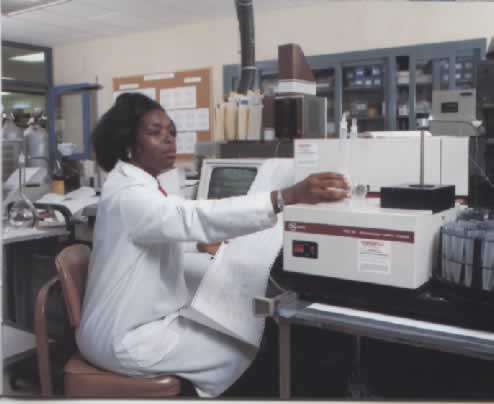 Naming “The winner” in last year’s state budget battles: “Mayor Agnos, whose determined lobbyists negotiated an $11.5 million bailout for San Francisco’s cash-strapped mental and public health care programs.”
San Francisco Examiner, September 2, 1990
Naming “The winner” in last year’s state budget battles: “Mayor Agnos, whose determined lobbyists negotiated an $11.5 million bailout for San Francisco’s cash-strapped mental and public health care programs.”
San Francisco Examiner, September 2, 1990
In 1987, 17% of General Hospital’s nurse positions were vacant. Today services are better and 5% of the nurse positions are vacant. The old district health centers have been converted into “primary care centers” where people can walk in and receive treatment. This has reduced the load at General and improved the quality of care.
There are new programs for abused children, improved services for the elderly. More chronically mentally ill children are being cared for.
The Agnos Administration has forced city agencies to coordinate services to reduce costs, not the number of people received services.
And San Francisco’s model foster care program for substance abuse of HIV-impacted infants – “Baby Moms” – is being taught to all other counties in California.
The New York Times: “In San Francisco, babies born with AIDS virus or to mothers addicted to alcohol or drugs can be placed in the Fragile Infant Care Program, or Baby Moms, in which nurses and psychologists help a permanent groups of foster parents prepare for the special problems they will face.”
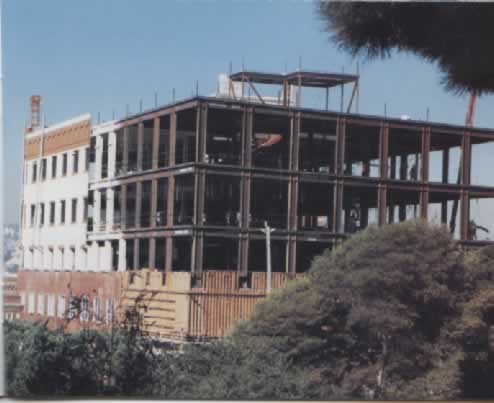 “A top national AIDS official said that other cities should emulate San Francisco’s approach in devising comprehensive plans for treatment of the virus in the next decade.”
San Francisco Chronicle January 12, 1990
“A top national AIDS official said that other cities should emulate San Francisco’s approach in devising comprehensive plans for treatment of the virus in the next decade.”
San Francisco Chronicle January 12, 1990
The nation looked to San Francisco find the way. We responded. City funding for AIDS has increased 98%. San Francisco is building at General Hospital the nation’s first AIDS Research Center. City AIDS spending increased from $10.9 million three years ago to $21.4 million this year.
San Francisco now has the nation’s only licensed adult day healthcare program for people with HIV. We doubled the places for homeless people with AIDS or ARC and opened the first residences for homeless families caring for a member with HIV.
We tripled the number of skilled nursing beds. Where no programs existed for those infected but not diagnosed, we now serve hundreds of people.
We inaugurated a family care leave policy that lets city workers take unpaid leave to care for a domestic partner, and we wan a national ban on AIDS discrimination.
As the United States Conference of Mayors AIDS Task Force Chair, Art Agnos helped lead the national lobbying effort to win passage of the Ryan White AIDS bill, which brought $13 million in new federal support to San Francisco’s programs.
 “Under Agnos, the tone, especially in the Department of Social Services, is decidedly progressive.” San Francisco Bay Guardian May 9, 1990
Today, San Francisco provides for more latchkey kids, more childcare, and more cae for children with special needs. The Agnos Administration has expanded programs for latchkey children. There are now 17 programs throughout the city where hundreds of kids can go after school until their working parents pick them up.
Programs for children with mental disabilities, physical disabilities, drug-addicted parents, abusive fathers. All have been expanded during the past 3 years.
Park and Recreation programs have increased in many neighborhoods. And new playgrounds and facilities are being built. .
22 childcare facilities have been remodeled and expanded. Foster care programs are increasing. And gang membership is decreasing.
The Mayor has put aside bureaucratic lines of authority and helped the school district. He and Sherry Agnos led the campaign to win voter approval of our school facilities improvement bonds. And drug education has been expanded into every classroom from the 3rd grade through the 12th.
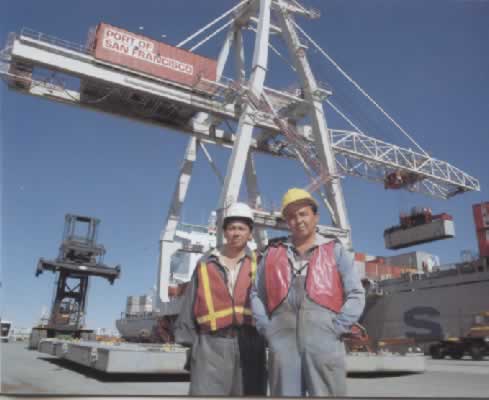 “San Francisco has taken a step toward reclaiming its place among major West Coast ports.” San Francisco Examiner, November 2, 1990.
Container shipping volume through the Port of San Francisco is up 90% from 116,000 tons last year to 221,000 tons this year. .
The Agnos Administration has begun an aggressive program to rebuild the shipping industry in San Francisco.
“Now with the adoption of a strategic plan, a new accounting system that has given the port a means to allocate costs…San Francisco is showing it still has a maritime future.” Oakland Tribune, January 7, 1991.
Five shipping lines have renewed their contracts with the Port for an additional 5 years. Our container shipping has doubled. “Europe’s largest transportation company has twice in the last three months doubled it business at Pier 80.” San Francisco Examiner, November 2, 1990.
In March 1991, San Francisco won the West Coast competition as a coffee import and distribution center, which brings $4 million in new revenue to the Port. .
Plans are under way for a major new Cruise Terminal and World Trade Center with 2,100 permanent and 1,200 construction jobs. “Approval of a new terminal for passenger ships could mark the beginning of a revitalized Port long languishing in rotten piers and deserted docks.” San Francisco Examiner, February 19, 1991.
 “The measure could be looked upon as a model or a protocol for other states and municipalities,” said Dr. Bruce Dickerson, executive director of the Center for Office Technology.” New York Times December 11, 1990
San Francisco’s successes have made news across the nation 17 times during the last 36 months.
On January 7, 1991, Time magazine reported on our new Video Display Terminal (VDt) Ordinance. The called the story “Safer by the Screen.”
“The evidence is controversial, but many workers who toil at video display terminals believe the devices cause health problems ranging from stiff necks to miscarriages. Last week their complaints were heard. San Francisco became the first major U.S. city to regulate working conditions on VDTs.
The San Francisco Business Times wrote: “By forging a compromise on how use of video display terminals (VDTs) is regulated in San Francisco, Mayor Art Agnos has fashioned a deal that has won the support of business and labor.”
The New York Times reported: “The (San Francisco VDT) legislation is being watched closely by unions and industry because it might give momentum to efforts around the nation to regulate computer terminals, which have been linked to a variety of health problems.”
Over 300 cities, all 50 states, and 6 nations have requested more information on the San Francisco model.
 “It seems that the old negative perception has not caught up with the new, positive reality.” San Francisco Chronicle, John Renard, President, Cushman Wakefield
Over 6,500 new business owners registered with the city in 1990. This is a 20% increase over 1988. With loans to 72 new small businesses, loans to programs assisting entrepreneurs in low-income neighborhoods, and one-stop service for businesses, the Mayor’s Office of Business and Economic Development has assisted 3,500 buinesses.
The President of Cushman Wakefield told the San Francisco Chronicle: “Our experience with city government is that Mayor Agnos and his Administration are making steady efforts to assist companies in coming to the city and conducting their business efficiently.”
The airport is now returning $13.5 million to the city treasury as return on investment. Cooperation between the city and private companies is bringing new grocery stores to some neighborhoods, more attractive storefronts to others, and earthquake recovery services to areas hardest hit.
The new world-class Fashion Center, rehabilitation of the Port, and the establishment of a “State Enterprise Zone” are all part of the Agnos Administration’s effort to stimulate the local economy, produce jobs, and increase city revenues.
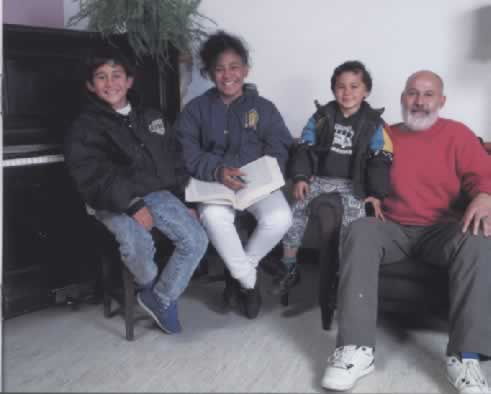 “In a dramatic 15-month turnaround, the San Francisco Housing Authority has rehabilitated nearly 600 previously unoccupied units and filled them with tenants.” San Francisco Examiner September 7 1990
The Agnos Administration has received the National Awards for Excellence in providing housing for the poor.
In 1989 under a Republican President, the federal Department of Housing and Urban Development for the first time named San Francisco as the recipient for its Award for Excellence in Rental Rehabilitation. In 1990, HUD selected San Francisco for the “1990 Special Achievement Award.”
San Francisco’s efforts to repair and modernize public housing increased by 300%. Senior citizens now have elevators. Leaky roofs have been repaired. Kitchens upgraded. And pride restored.
The vacancy rate has declined from approximately 10% (647 vacant units), with a $6 million deficit, to a vacancy rate of 1% (65 units) with a cash surplus. The Housing Authority budget is balanced for the first time in 10 years.
Outside of the Housing Authority, the Agnos Administration has increased by 200% the city’s commitment to rehabilitate housing for low- and moderate-income households. In 1987, the city’s commitment of $7 million rehabilitated 342 units. Last year, $23 million was committed for 2,240 households.
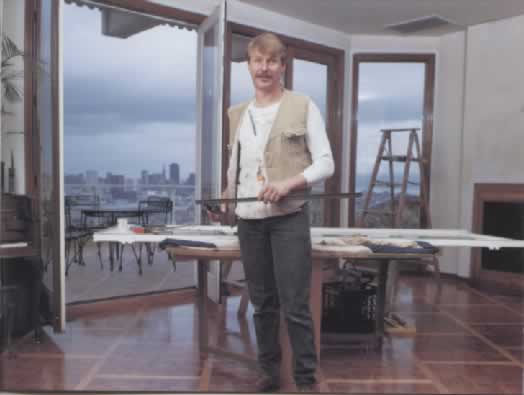 The new [Agnos Administration] plan even identified where the money may come from to finance its lofty goals of 22,647 new units – 13,480 of them to be affordable to middle-income residents – by 1995.” San Francisco Examiner August 6, 1990
“A sweeping housing policy that promises subsidies for medium-income residents as well as the poor.” San Francisco Examiner
In 1987, the city’s commitment was $7 million for 342 units of low- and moderate-income housing. In 1989, the Agnos Administration funded 2,573 new housing units – the most in any year during the last 20 years. In 1990, $23 million was committed by the Mayor to building or rehabilitating an additional 2,240 low- and moderate-income homes.
The new Fillmore Center opened this year, and nearly 50% of the 1,113 units are already leased to minority and low-income families. 60% of he construction workers were minorities and 30% were Western Addition residents.
The demolition of single-family homes has decreased 32% during the first three years of the Agnos Administration.
And after Mission Bay was defeated last year, the Agnos Administration brought all sides together to compromise. The new consensus will bring 8,750 homes with at least 3,500 affordable, 69 acres of open space, a detailed affordable housing finance plan which requires the developer to put up over $140 million in cash and land. It guarantees linking office development to housing construction.
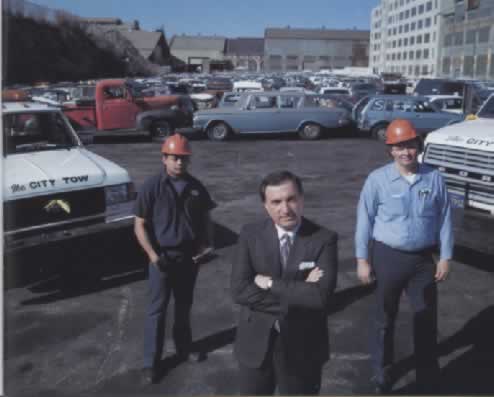 “An urban recycling program named the nation’s best by the National Recycling Coalition.” San Francisco Chronicle September 17, 1990
The Agnos Administration has removed 9,000 abandoned cars. Last year we wiped out the backlog by removing 5,300 cars. Today, many people forget that one of the biggest issues in the 1987 campaign for Mayor was the number of abandoned cars sitting on the streets of San Francisco. Only 2,000 cars were being towed each year.
All of the candidates promised to remove them. Art Agnos won the election. And he removed the cars.
There’s nothing glamorous about many of the things a city government is expected to do. The Agnos Administration has tackled those tasks with a commitment to excellence.
More city streets are being repaved than at any other time. New parking garages are under construction. And over 41,000 tons of litter was removed last year from city streets, four times more than a decade ago, with no increase in budget.
A $145 million bond is financing sewage treatment projects that put San Francisco above the Federal Clean Water Act standards.
City buildings are being earthquake-proofed, school buildings are being repaired, sidewalks inspected and replaced, new traffic signals installed.
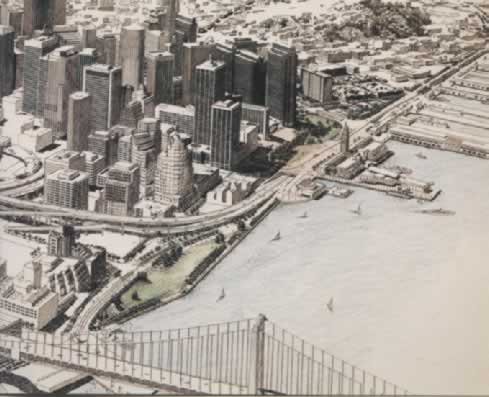 “A plan to fund new mass transit and traffic projects into the new century…the proposed projects are impressive and necessary.” San Francisco Examiner October 12, 1989
Muni is the most heavily traveled transit system, but fares are among the lowest in the country. Mayor Agnos is finalizing the most ambitious system modernization and rail expansion in Muni’s history. Wor has begun on an expansion of Muni Metro service south to Potrero Hill. The new F-line will be a historic streetcar line from Market Street to Fisherman’s Wharf.
Muni ridership is up to 760,000 daily trips. Over 200 new Muni buses have been purchased…the largest number of new buses in12 years. 30 smaller and quieter buses have been added in response to neighborhood concerns.
Our accident rate has fallen to its lowest level in more than 10 years and 80% of the exterior graffiti has been removed. New York City spent $45 million to remove graffiti. We’ve done it without adding to the budget.
Transit services for the disabled have increased with the addition of 45 new lift-equipped buses and 7 new Muni lines designated as accessible.
 “A major accomplishment…two-year pay increases, settlement of all labor contracts, expansion of some services, and no major tax increases. Outstanding bond rating affirmed.” Standard and Poor’s Wall Street financial credit rating.
The Mayor’s Office has successfully negotiated 40 contracts with city unions without a strike. In 1988, the voters in San Francisco decided to transfer responsibility for negotiating contracts with the city’s 25,000 employees to Mayor Agnos.
40 contracts without a strike during tough economic times.
The Mayor’s Employee Relations team signed the first written contract with the San Francisco Police Officers in 15 years.
Art Agnos appointed the city’s first Collective Bargaining Task Force in 1990 with experts from both labor and management to write a new master plan for more efficient labor relations in the future.
The Mayor personally intervened to end a strike in the city’s 6 largest private hospitals, and he helped mediate other private-sector strikes: the janitors in the financial district and musicians at the Opera.
Despite cutbacks by federal and state government, the Agnos Administration has made $20 million in progress toward meeting comparable-worth pay scales for all women and minority city employees. And today we have the first contracts that recognize childcare rights.
 “[The San Francisco Fire Department] is in good hands.” San Francisco Chronicle October 5, 1989 United States District Court Judge Marilyn Patel
“Judge says Fire Department is ‘Out of control.’” S.F. Chronicle 11/5/88. U.S. District Court Judge Marilyn Patel
“[The San Francisco Fire Department] is in good hands.” San Francisco Chronicle October 5, 1989 United States District Court Judge Marilyn Patel
“Judge says Fire Department is ‘Out of control.’” S.F. Chronicle 11/5/88. U.S. District Court Judge Marilyn Patel
Racism within the Fire Department was out of control. African American firefighters were taunted with KKK tactics. A Nazi swastika was used to torment minority firefighters. Minorities and women were historically passed over for promotions, and the Federal Court’s order to stop the harassment was ignored.
Today, Frank Scales is the first African American Deputy Chief. Anne Young is the first woman lieutenant in the Fire Department. Theresa Gee is the first Asian American woman firefighter in the city’s history.
Minorities and women are being hired and promoted. Excessive overtime pay is being reducd and funds are now available to equip firefighters as they should be.
Chief Fred Postel has the Department better managed than at any time in recent history. The Guardian is our newest fireboat, there are 13 new fire engines and hook and ladder trucks with 6 more coming, and a new emergency command center is under construction.
The 911 phone system is being upgraded and the number of ambulances on duty is up from 10 to 13. Ambulance response time has been improved by 15%.
 “Police Chief Willis Casey continues to give every indication that he is a very special cop.” San Francisco Examiner January 25, 1991
“The D.A.’s office threw out nearly half the department’s felony cases – largely because of deficient police reports.” S.F. Examiner, 12/10/90
New Police Chief Willis Casey said: “The standards that offices were held to was too low.” In making arrests and filing reports, he added: “They notoriously were leaving things out and nobody was taking them to task.”
In just months, Chief Casey made sure serious complaints against officers are heard by the Police Commission reinforcing civilian control.
Chief Casey disbanded the intelligence unit, declaring that the police have no business spying on political groups. He’s opened up an attack on “hate” crimes. And he’s rotating senior officers in order to help shake up the ranks.
Already there are more officers on patrol. The new crowd control standards have prevented abuse of force and a repeat of the Dolores Huerta scandal.
And the Chief moved his office into the Tenderloin, setting the example as he increases the number of officers working a beat in high-crime neighborhoods.
The Examiner editorial: “Give him [Casey] credit. The steps he has taken are all in the right direction.” December 31, 1990.
 “San Francisco Mayor Art Agnos is taking impressive steps to help homeless men women and children get off the streets and into safe, decent and affordable housing.” Los Angeles Times, July 29, 1990
In 1990, San Francisco housed 2,972 homeless people. In 1991, that number will reach 3,859. The Agnos Adminstration strategy is leading the nation in shifting away from a shelter system. For the first time a network is operating to take people off the streets and given them the tools and housing they need to take care of themselves.
In 1991, emergency housing will have increased 8%. Transitional housing will increase by 49%. Permanent housing for the homeless will increase 51%.
San Francisco is leading the country in winning federal and state funding support to provide an answer to homelessness that the rest of the nation can follow.
Time magazine summarized San Francisco’s efforts best: “San Francisco could end up setting an example. When last year’s earthquake nearly leveled a few crumbling flophouses, the city resisted building the standard emergency homeless shelters.”
“Instead, officials used $12 million in federal relief money to build state-of-the-art multiservice centers where homeless people can live, get healthcare, see a social worker, treat their addictions, receive job training – whatever is necessary to meet their needs and return them to independent living.”
 “The [library] project immediately won rave reviews for its classical, contextual architecture.” San Francisco Examier, October 2, 1990
A new Kezar Amateur Athletic Faciity, a new Museum of Modern Art, a new Main Library The “New Main” will take its place as one of the city’s crown jewels. Twice as much space – 375,000 square feet. Twice as many books – 1.6 million books and periodicals. Five times as much seating – over 1,800 seats for library users.
The Mayor and Sherry Agnos helped lead the campaign to win voter approval for this $109 million state-of-the-art library, which will move San Francisco to the front ranks of libraries worldwide.
The “New Main” will feature more than400 computer terminals with a complete library catalogue and on-line reference service.
The new “electronic library” will be available free at all neighborhood branch libraries and by personal computer from any San Francisco home or office.
The new 10,000-seat Kezar Amateur Athletic Facility will be completed soon; both the new Museum of Modern Art and the “New Main” will open in 1995.
Epilogue:
For the first time, women lead 12 city departments; we have Hispanics directing our Port and Department of Social Services; African Americans as Deputy Fire Chief, Public Utilities Commission Director and Chief Juvenile Probation Officer; the first Chinese American Director of the Human Rights Commission; the first Filipino American Police Commander, and the first openly gay City Controller.
close window